
CyberWhist Learning Tools to Practice Computational Thinking
CyberWhist is a web-based adaptation of the gameplay rules and mechanics of a set of Classic Whist derived card games, such as Bridge, Euchre, BidWhist and Spades. CyberWhist leverages the Whist games’ universal cultural appeal, and cognitive elements, to serve as a Game-based Learning Tool for Learners to practice the stages of Computational Thinking. The CyberWhist design intent is to broaden participation in K12 Computational Thinking / Computer Science by serving as a culturally situated supplement to the existing Learning Tools.
CyberWhist incorporates Open Edx LMS to provide the Learning Tools to Practice Computational Thinking.
Access Courses LMS to Practice Computational Thinking here.
Note courses may require an invitation. Please use “Request Invitation” form below.
Through various combinations of courses and lessons, the Learning Tool can emphasize a practice area and accommodate the learner’s capability. CyberWhist as a Computational Thinking Practice Tool provides Learners with multiple opportunities to:
- Deliberately examine and codify their gameplay steps/decisions (such as conditionals, rules of thumb, algorithms),
- Develop the code to replicate the manual play (using decomposition, abstractions),
- Perform solution execution/evaluation by comparing the manual game with the automated results.
CyberWhist features include:
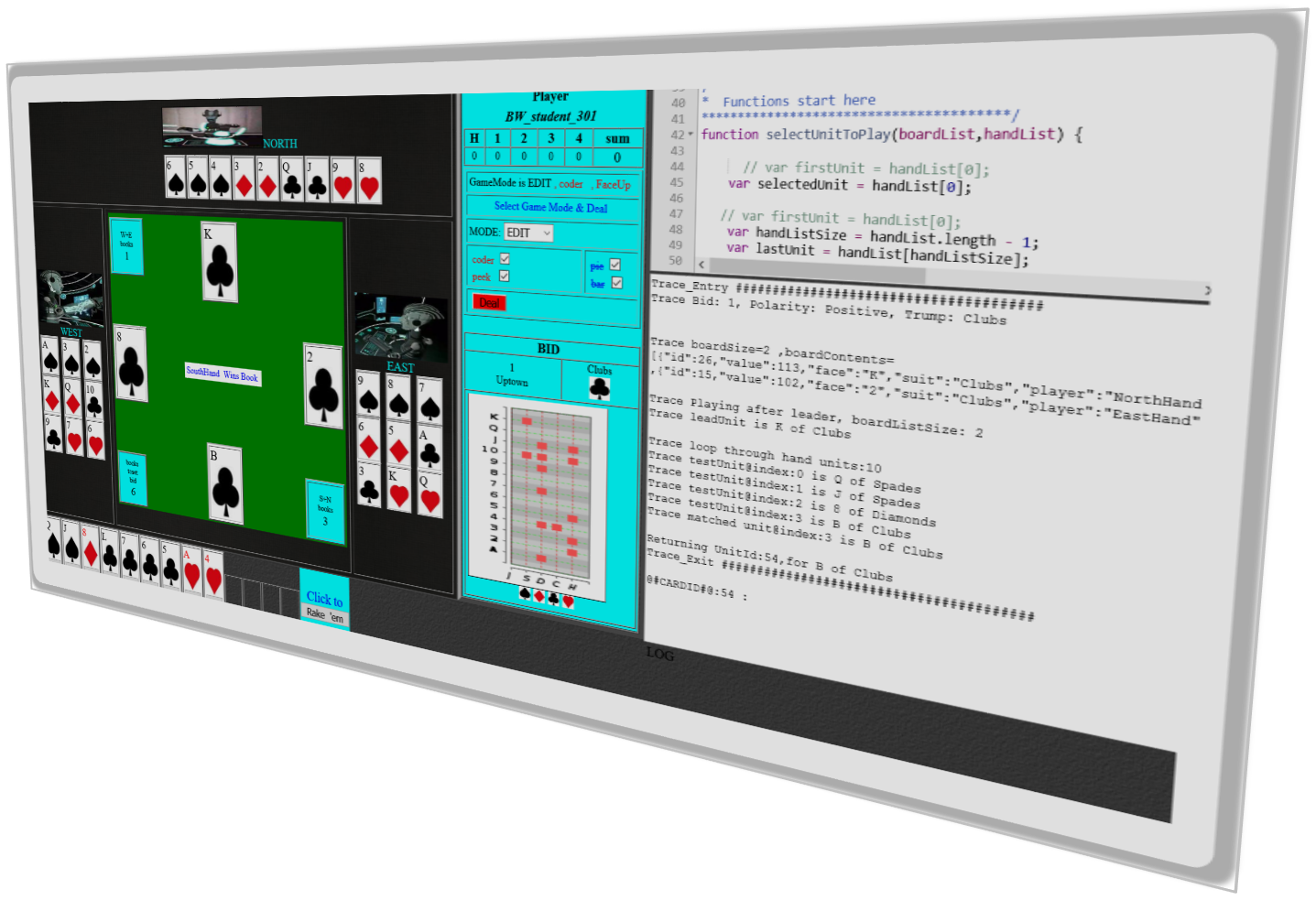
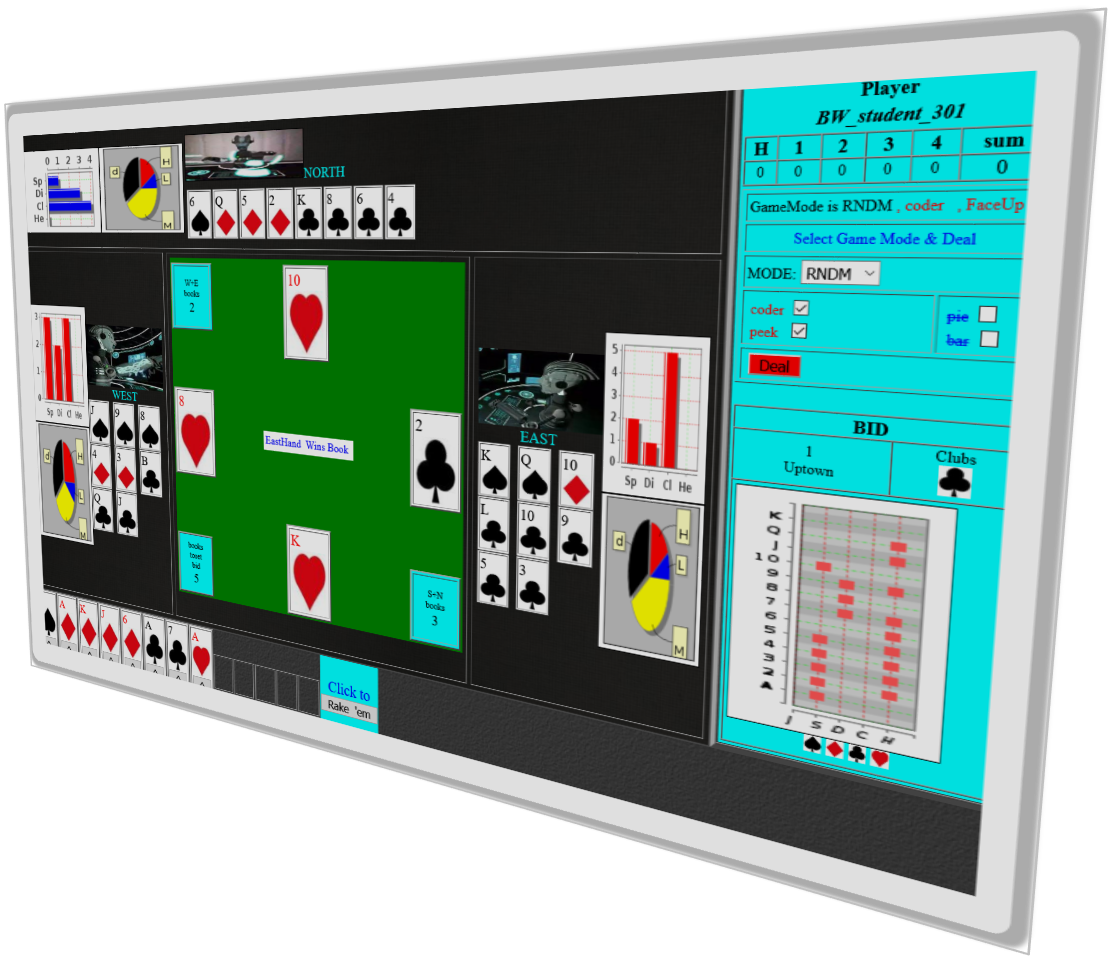
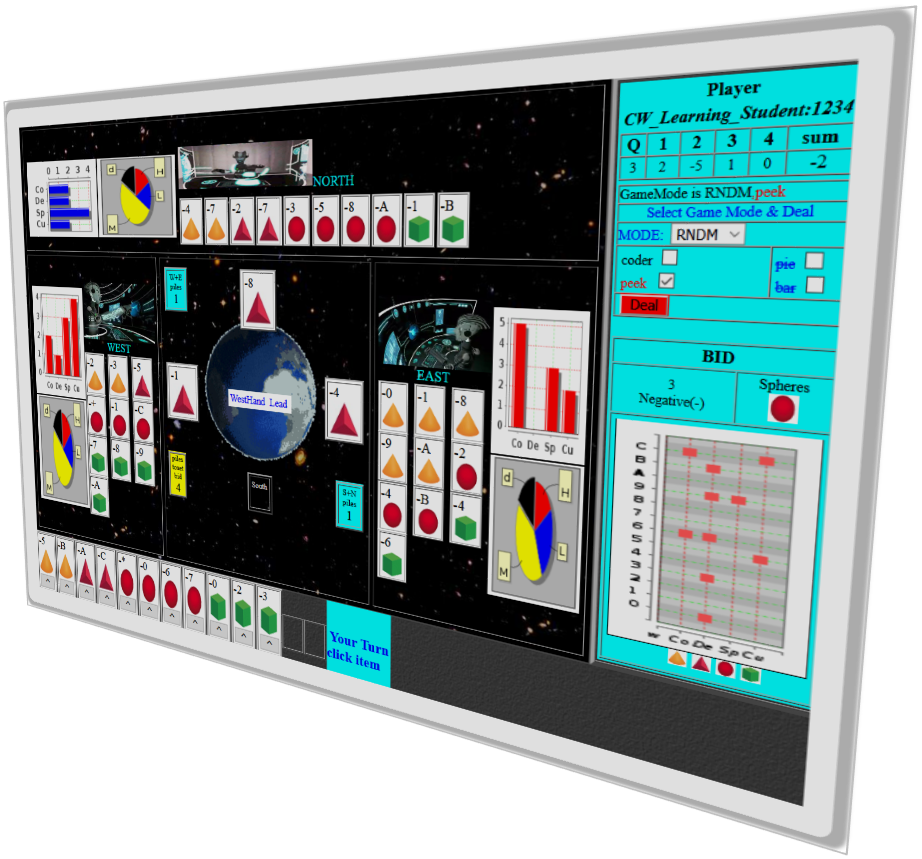
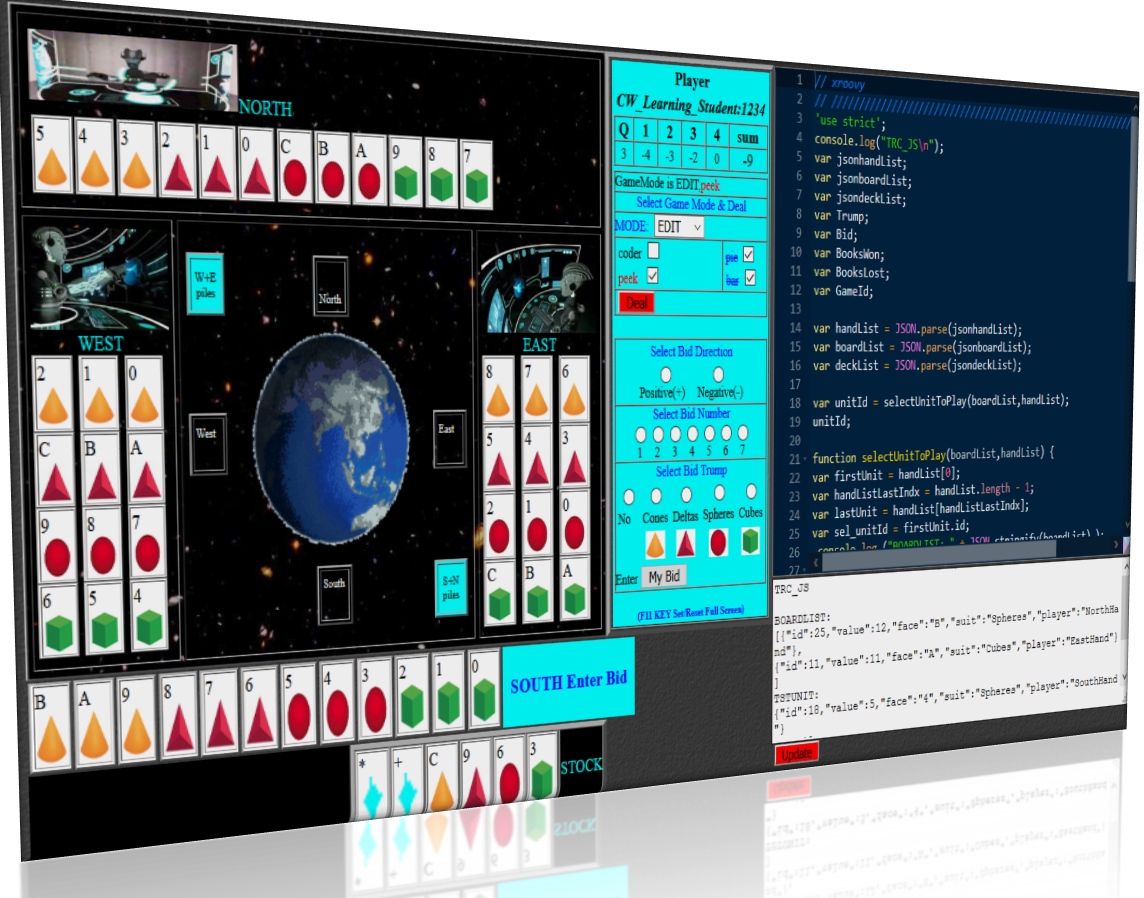
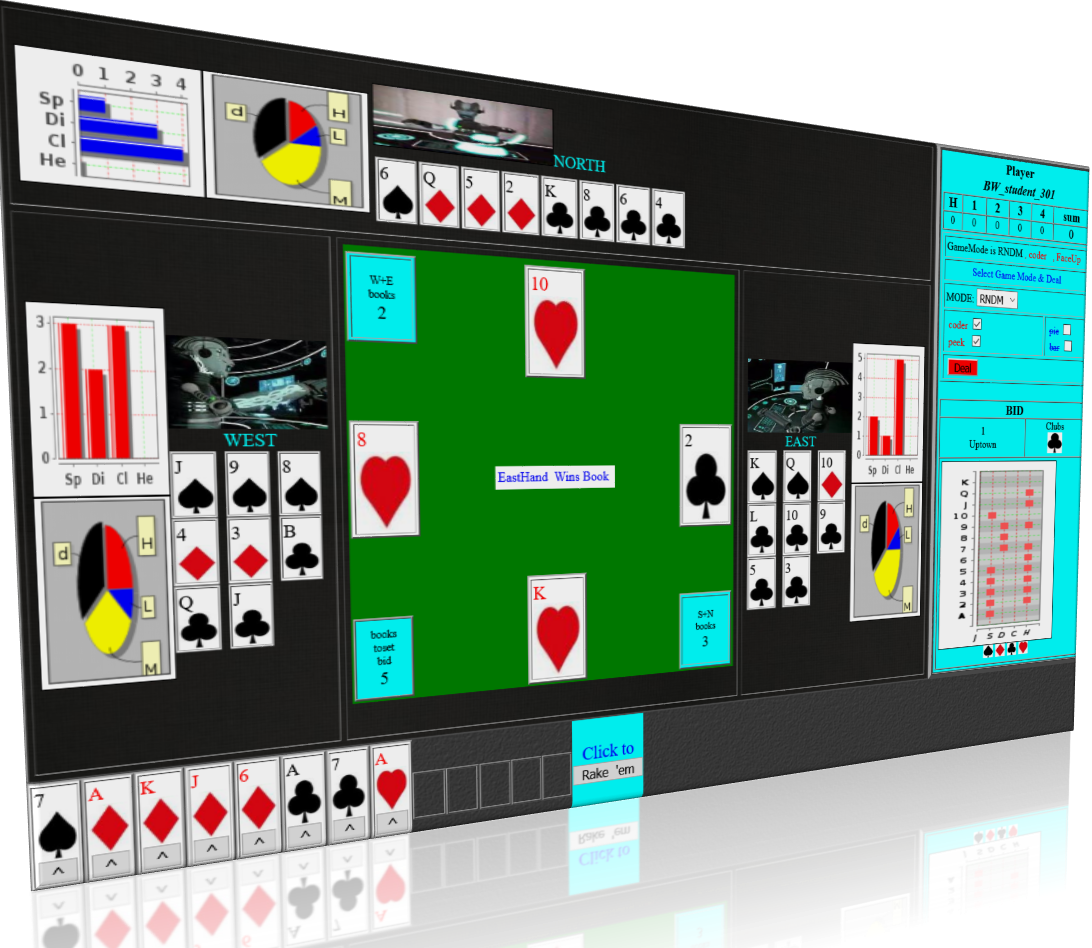
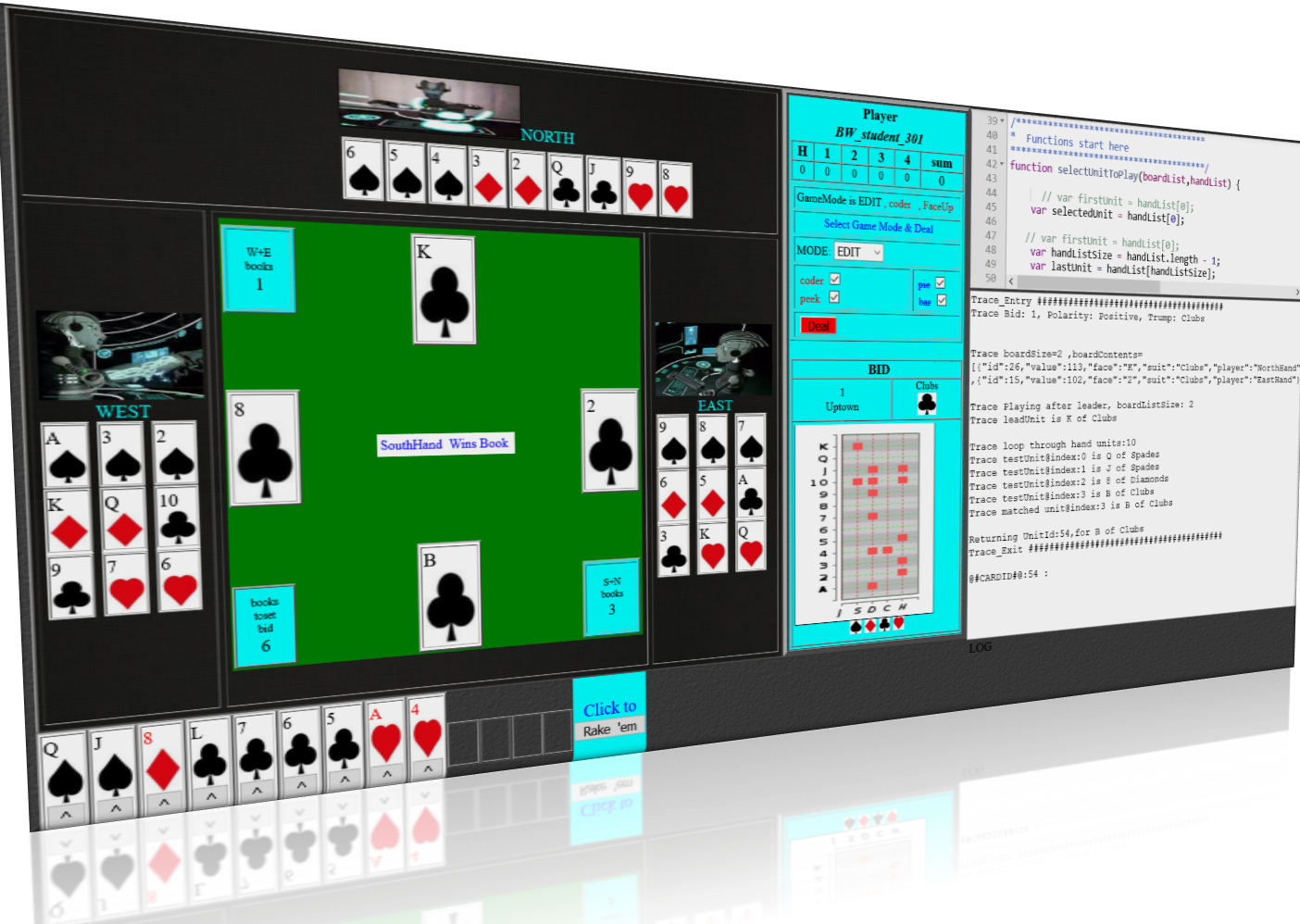
- Game Based Learning Tool presenting a “Spaceview” using modified/refaced version, in addition to a classic version of BidWhist representation of standard playing cards. The games incorporate pie, bar, plot graphs, to display additional gameplay information.
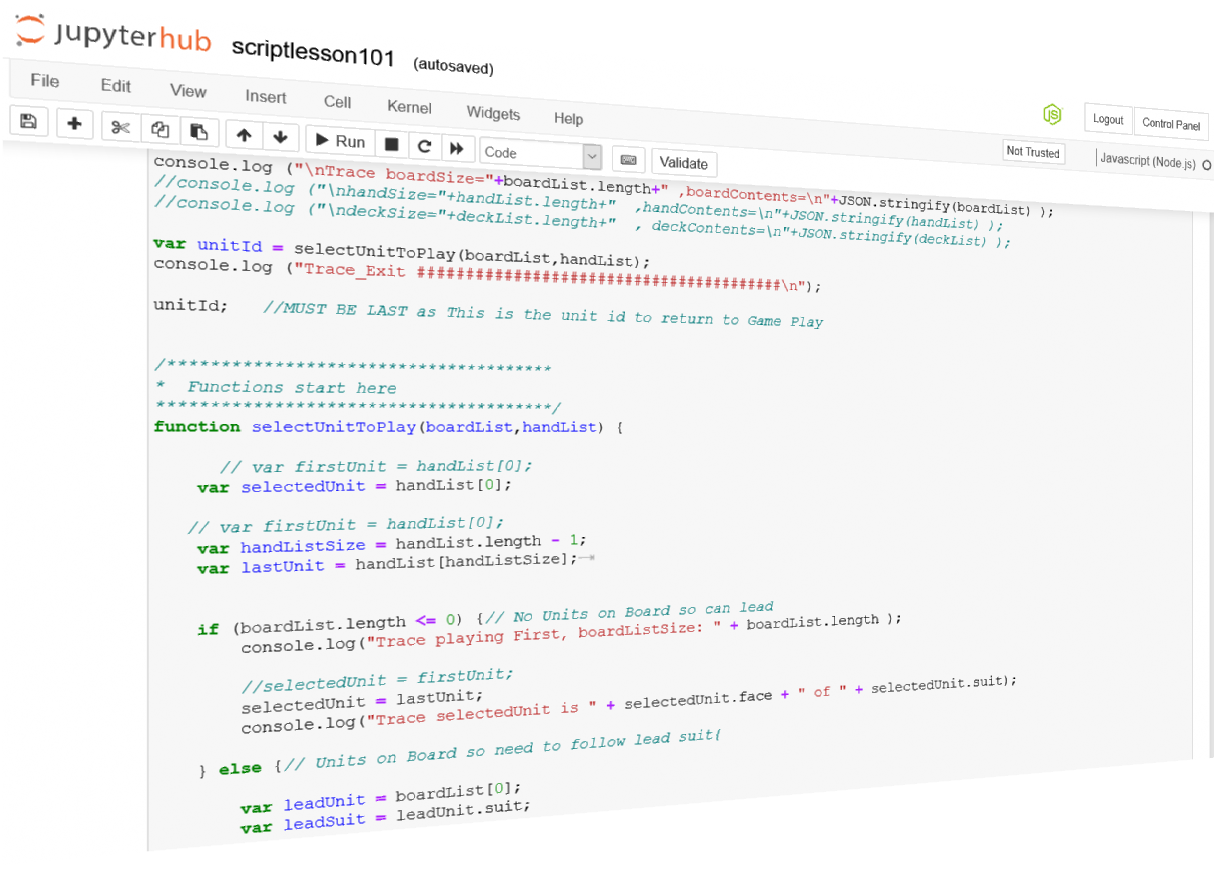
- Integrated JupyterHub Notebooks as a web-based interactive computational development environment.
- Built-in ACE EDIT tool that accepts Learner’s Code.
- Learning Management System (LMS) access using Learning Tools Interoperability (LTI).
The overall effect is to provide a more structured and directed Game-Based Learning experience.